

If you’ve ever finished a book, excitedly opened Goodreads or Amazon to see what everyone else thought, and walked away more confused than before, you’re not alone. One review declares a novel a masterpiece worthy of every award imaginable, while the next insists it was the worst book ever published. Some reviewers seem thoughtful and balanced. Others appear determined to tear every book apart.
For many readers, trust in online book reviews has eroded over the years. Review bombing, influencer marketing, paid promotions, advance reader copy campaigns, and personal agendas have made it harder to know which opinions deserve attention. As a result, many book lovers have started questioning whether review websites are still useful or whether they’re simply echo chambers filled with noise.
The truth lies somewhere in the middle. Book review websites remain valuable resources, but only when readers understand how to separate reliable opinions from unreliable ones. No single review can determine whether a book is worth your time. Instead, learning how to evaluate reviewers and recognize patterns can make these platforms incredibly helpful.
Why Readers Have Lost Trust
Several factors have contributed to growing skepticism about online book reviews.
The first is sheer volume. Popular books often receive thousands or even tens of thousands of ratings within weeks of release. While that sounds impressive, more reviews do not automatically produce better recommendations. Instead, they often create a flood of contradictory opinions that make it difficult to identify meaningful insights.
Social media has also changed how books are reviewed. Viral trends can push a title into the spotlight overnight. Readers sometimes purchase books because everyone else is reading them, only to discover the story isn’t a good fit for their tastes. Disappointment often leads to unusually harsh reviews that reflect unmet expectations more than the quality of the writing itself.
On the opposite end, enthusiastic fan communities occasionally reward favorite authors with glowing five-star reviews before the book has even been widely read. Early excitement can inflate ratings that eventually settle once a broader audience finishes the novel.
Another challenge comes from review bombing. Sometimes, readers intentionally leave extremely low ratings because of controversy surrounding an author, publisher, marketing campaign, or even something unrelated to the book itself. In these cases, the reviews reveal more about internet discourse than the actual reading experience.
All of these trends make it harder for everyday readers to determine which opinions genuinely reflect the book.
Ratings Tell Only Part of the Story
Many readers rely heavily on the average star rating when deciding whether to pick up a book.
While average ratings provide a useful snapshot, they rarely tell the whole story.
A book with a 3.8 average might become your favorite novel of the year, while one sitting comfortably above 4.6 stars may leave you completely unimpressed. Ratings are influenced by genre expectations, audience size, marketing reach, author popularity, and even release timing.
Different genres also produce different rating patterns.
Romance readers often rate generously because emotional satisfaction plays a large role in their enjoyment. Literary fiction readers sometimes rate more critically. Horror fans may reward originality over polish. Cozy mystery readers may prioritize charming characters over intricate plotting.
Without understanding the audience behind the rating, a single number means very little.
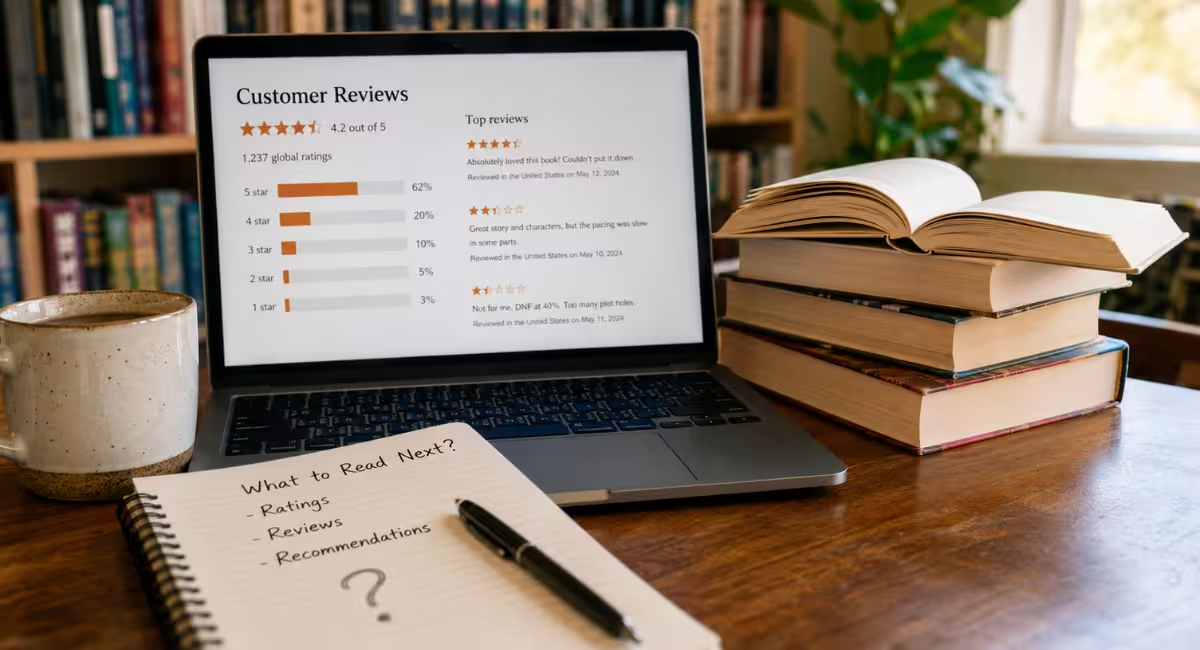
Instead of focusing solely on averages, look at the overall distribution of ratings. A book with many three, four, and five-star reviews may have broad appeal, while one with equal numbers of one-star and five-star ratings often indicates a more polarizing reading experience.
Goodreads: A Community Built Around Readers
Goodreads remains one of the largest book communities in the world. Millions of readers track their reading, create shelves, participate in reading challenges, and share reviews.
Its greatest strength is diversity. Instead of hearing from professional critics alone, readers encounter opinions from people of different ages, backgrounds, interests, and reading habits. This broad range creates valuable conversations that traditional newspapers never offered.
However, community-driven reviewing also introduces challenges. Many Goodreads reviewers have strong personal preferences that influence every rating. Some rarely award five stars. Others give nearly every enjoyable book four or five stars. Certain reviewers focus almost exclusively on romance, while others specialize in science fiction, nonfiction, or literary fiction.
Because everyone uses different rating standards, comparing star ratings across reviewers becomes difficult.
The most useful Goodreads reviewers often explain why they reached a particular conclusion rather than simply assigning stars.
Amazon Reviews: Helpful but Imperfect
Amazon reviews serve a different purpose.
Many shoppers visit Amazon specifically to decide whether to purchase a book. Reviews frequently discuss physical quality, audiobook narration, Kindle formatting, shipping concerns, and value alongside the story itself. This practical information can be extremely useful.
However, Amazon also presents challenges. Some reviews focus entirely on delivery problems instead of the content. Others contain spoilers without warning. Occasionally, reviewers admit they never finished the book but still assign a rating.
Verified Purchase labels add a layer of credibility, but they do not guarantee thoughtful analysis. Purchasing a book does not automatically produce an insightful review.
Instead, look for reviewers who explain both strengths and weaknesses while remaining specific.
Professional vs. Community Sites
Professional review publications and community-driven platforms serve different purposes, and each offers unique strengths.
Professional reviewers typically evaluate books using established editorial standards. Reviews published by respected newspapers, literary journals, and professional review organizations often discuss writing quality, themes, structure, historical context, originality, and literary significance. Because these reviews are edited before publication, they tend to be more consistent, polished, and carefully argued.
Community sites, such as Goodreads and Amazon, offer something different. Instead of a small number of expert opinions, they provide thousands of perspectives from everyday readers. These reviews often focus on emotional reactions, pacing, favorite characters, entertainment value, and whether readers would recommend the book to friends.
Neither approach is inherently better.
Professional reviews can help readers understand a book’s literary strengths, while community reviews often reveal how enjoyable the average reader found the experience.
The smartest approach combines both.
Reading one or two professional reviews alongside several detailed community reviews creates a more complete picture than relying on either source alone.
Book Bloggers Offer a Valuable Middle Ground
Independent book bloggers often bridge the gap between professional critics and casual reviewers.
Unlike large publications, bloggers usually develop recognizable reading tastes over time. Regular readers begin to understand which genres they enjoy, which tropes they avoid, and how they assign ratings.
This consistency builds trust.
Many bloggers clearly explain their reviewing philosophy, disclose whether they received advance copies, and openly acknowledge personal preferences.
Following bloggers, like Bookmarks ‘n Blankets, whose reading tastes closely match your own, can become far more valuable than chasing overall star ratings. To see all my four and five-star book reviews, check out this page.
One trusted reviewer who consistently shares your preferences may save you more disappointing reads than thousands of anonymous ratings.
Social Media Reviews
BookTok, Bookstagram, YouTube, and book podcasts have become powerful sources of recommendations.
These platforms excel at generating excitement and introducing readers to books they might never have discovered otherwise.
However, shorter content often sacrifices nuance.
A thirty-second video rarely has enough time to discuss pacing issues, uneven characterization, or mixed feelings. Many creators understandably focus on enthusiasm because positive recommendations generally perform better with audiences.
That doesn’t mean creators are dishonest. It simply means their content often serves a different purpose. Social media excels at discovery, while longer written reviews provide deeper evaluation.
Using both together can work well.
How to Spot a Reliable Review
Not every review deserves equal weight. Learning to identify trustworthy reviewers can dramatically improve your reading decisions.
Reliable reviews often share several characteristics:
They explain the reasoning. Instead of saying a book was amazing or terrible, thoughtful reviewers explain exactly what worked and what didn’t.
They acknowledge personal preferences. A reviewer might admit they dislike slow-paced novels or love found family stories. This honesty helps readers determine whether those preferences align with their own.
They include both positives and negatives. Even favorite books usually contain flaws. Balanced reviewers recognize strengths without pretending every aspect is perfect.
They avoid unnecessary spoilers. Good reviewers discuss plot, pacing, and themes while preserving important surprises.
They remain respectful. Critiquing a book differs from attacking an author or insulting readers who enjoyed it. Professionalism often signals credibility.
They stay consistent. After following a reviewer for several books, you’ll notice patterns. Consistent standards make their future recommendations more meaningful.
Warning Signs of Unreliable Reviews
Just as reliable reviews have recognizable qualities, unreliable ones often share common warning signs.
Extremely emotional language without supporting details usually offers little value.
Reviews that criticize unrelated political controversies instead of discussing the book itself may not reflect the reading experience.
One sentence reviews like “Best book ever” or “Absolutely terrible” provide almost no useful information.
Reviews filled entirely with GIFs, memes, or inside jokes may entertain but rarely help someone decide whether to read the book.
Another warning sign is reviewing books before publication without a meaningful discussion of the actual content.
The goal isn’t to dismiss these reviews entirely but to recognize that they should carry less weight than thoughtful analysis.
Build a Circle of Trusted Reviewers
One of the best strategies is creating your own trusted network of reviewers.
Over time, notice which reviewers consistently enjoy the same books you do. Follow bloggers, Goodreads reviewers, podcast hosts, YouTubers, or friends whose recommendations regularly match your reading tastes.
Their future reviews become increasingly valuable because you understand the context behind their opinions.
This personalized approach often proves far more accurate than relying on overall ratings.
Remember That Reading Is Personal
No review can predict exactly how you will respond to a story.
Books connect with readers differently depending on life experiences, expectations, mood, and personal interests.
A novel that deeply moves one reader may leave another completely unmoved.
That subjectivity is one of reading’s greatest strengths.
Reviews should guide your decisions, not make them for you.
They provide information, highlight potential strengths and weaknesses, and offer perspectives you may not have considered. Ultimately, your own experience remains the only opinion that truly determines whether a book was worth reading.
Final Thoughts
Book review websites have changed dramatically over the past decade, and it’s understandable that many readers feel uncertain about trusting them. Between viral trends, review bombing, influencer marketing, and wildly different rating standards, finding dependable recommendations requires a little more effort than it once did.
Fortunately, trustworthy reviews still exist. The key is learning to evaluate reviewers rather than simply accepting star ratings at face value. Combining professional criticism with thoughtful community reviews, following reviewers whose tastes match your own, and looking for balanced, specific analysis will help you make better reading choices.
The best review website isn’t necessarily the one with the highest number of ratings. It’s the one that consistently helps you discover books you’ll genuinely enjoy. Once you find reviewers who understand the kinds of stories you love, every recommendation becomes far more meaningful.
Happy Review Reading!