
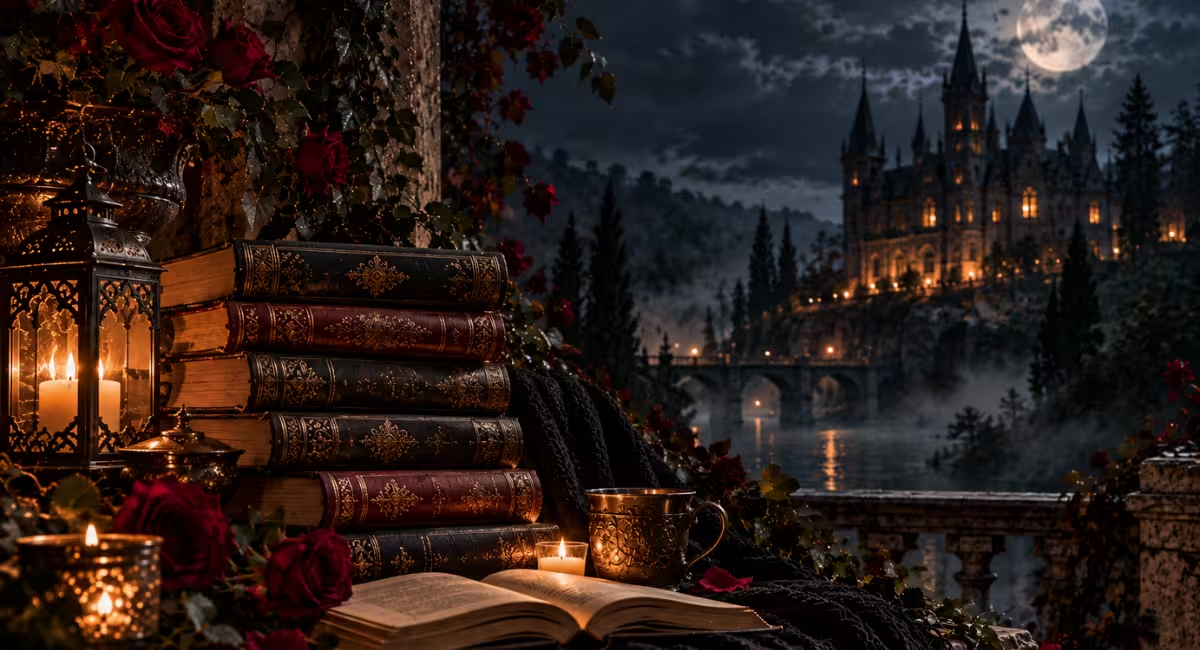

Dark mansions, crumbling castles, family secrets buried for generations, strange noises in the middle of the night, isolated estates surrounded by fog, and a mysterious figure standing at the end of a hallway. Gothic fiction has a very particular feeling.
You may recognize a Gothic book almost immediately from its atmosphere, but defining exactly what makes a story Gothic can be surprisingly difficult. A book does not have to contain ghosts, vampires, or supernatural creatures to qualify. It does not even have to be particularly scary.
Instead, Gothic fiction is defined by a combination of atmosphere, setting, psychological tension, mystery, isolation, fear, and the unsettling possibility that something terrible is hiding just beneath the surface.
It is a genre built around secrets. Something happened in that house. Something happened to that family. Someone is lying. Something has been buried, forgotten, locked away, or deliberately concealed.
And eventually, someone is going to uncover it.
So, what exactly makes a book Gothic? Let’s explore the history of Gothic fiction, its most recognizable characteristics, the themes and tropes that appear again and again, and how Gothic fiction differs from horror and Gothic fantasy.
What Is Gothic Fiction?
Gothic fiction is a genre that combines mystery, suspense, psychological tension, dark atmosphere, and often elements of romance or the supernatural.
The word “Gothic” can sometimes make people think primarily about aesthetics. Black clothing, candles, ravens, old cemeteries, abandoned castles, and stormy nights certainly fit the mood, but Gothic fiction goes much deeper than its appearance.
At its heart, Gothic fiction is concerned with fear, secrets, repression, isolation, decay, and the unknown. Gothic stories often place characters in environments where something feels deeply wrong, even when they cannot immediately explain why.
An old house might contain a disturbing history. A seemingly respectable family might be hiding generations of secrets. A character might begin questioning whether the strange things happening around them are supernatural or whether their own mind can be trusted.
The past rarely stays safely in the past, and that tension between what is known and unknown is one of the most important elements of Gothic fiction.
A Brief History of Gothic Fiction
Gothic fiction has been around for more than 250 years. Horace Walpole’s The Castle of Otranto, published in 1764, is generally considered the first Gothic novel. Later editions even carried the subtitle A Gothic Story.
The novel established many elements that would become familiar within the genre, including an ancient castle, mysterious events, family conflict, secrets, danger, and supernatural occurrences.
Other writers expanded the genre during the late 18th and early 19th centuries. Ann Radcliffe became one of the most influential early Gothic writers with novels such as The Mysteries of Udolpho, while Matthew Lewis pushed the genre into darker territory with The Monk.
Some of the most recognizable Gothic and Gothic-influenced classics followed, including:
- Frankenstein by Mary Shelley
- Jane Eyre by Charlotte Brontë
- Wuthering Heights by Emily Brontë
- The stories of Edgar Allan Poe
- Strange Case of Dr Jekyll and Mr Hyde by Robert Louis Stevenson
- Dracula by Bram Stoker
These stories explored madness, death, obsession, guilt, identity, morality, repression, monstrosity, forbidden knowledge, and fear.
Over time, Gothic fiction moved beyond medieval castles and remote European landscapes. Gothic stories could unfold in Victorian mansions, Southern estates, small towns, boarding schools, universities, country homes, and even ordinary suburban neighborhoods.
The scenery changed, but the unease remained.
Atmosphere Is Everything in Gothic Fiction
If there is one characteristic that immediately distinguishes Gothic fiction, it is atmosphere.
Gothic stories tend to feel oppressive, mysterious, eerie, melancholic, or unsettling. The setting frequently creates the impression that something bad has happened, is happening, or is about to happen.
A Gothic atmosphere might include:
- Fog rolling across an empty landscape
- Rain beating against old windows
- Floorboards creaking in an otherwise silent house
- Candles flickering in dark corridors
- Abandoned or forbidden rooms
- Overgrown gardens and crumbling buildings
- Cold stone walls and shadowy staircases
- Old portraits whose eyes seem to follow someone across the room
- Strange noises with no obvious explanation
None of these things necessarily have to be dangerous. But in a Gothic novel, they feel dangerous.
Gothic fiction thrives on anticipation. The reader spends much of the story waiting for the source of that uncomfortable feeling to reveal itself, and sometimes what we imagine is more unsettling than what is actually there.
The Setting Often Feels Like a Character
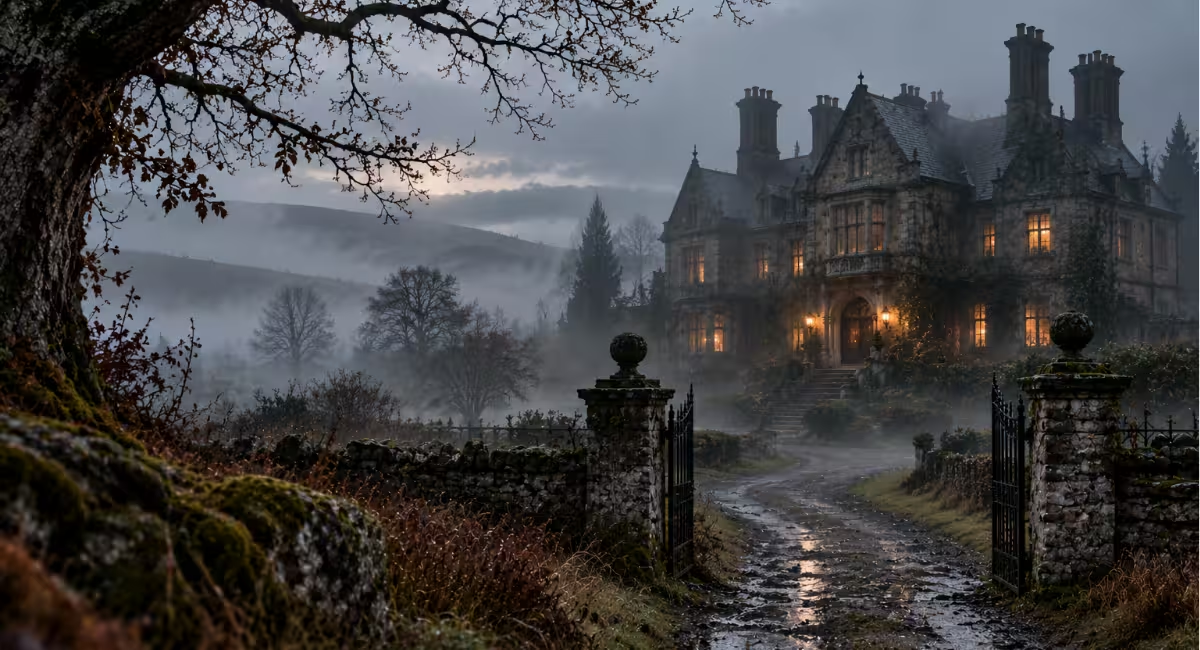
Setting is especially important in Gothic fiction. Traditionally, Gothic stories were associated with castles, monasteries, ruins, remote estates, and enormous old houses.
Modern Gothic fiction has expanded far beyond those locations, but isolation and history remain important. The setting usually contributes to the story rather than simply providing a backdrop for it.
Common Gothic settings include:
- Old mansions and ancestral homes
- Castles and ruins
- Remote villages
- Boarding schools and universities
- Monasteries and churches
- Abandoned buildings
- Dark forests
- Windswept moors
- Isolated islands
- Decaying estates
- Forgotten family properties
These places often have histories of their own. A house might have belonged to the same family for generations. A school might be hiding an old scandal. A village might refuse to discuss something that happened decades earlier.
The setting becomes part of the mystery. Sometimes it even feels as though the building itself is watching the characters.
The Past Refuses to Stay Buried
One of the most fascinating characteristics of Gothic fiction is the importance of the past. In Gothic stories, history is rarely harmless.
Characters inherit problems they did not create. Family secrets stretch across generations. Old crimes return to haunt new victims. Forgotten tragedies continue influencing people decades or even centuries later.
This is why Gothic novels frequently feature objects and discoveries connected to history, such as:
- Old letters and diaries
- Family portraits
- Photographs
- Inherited possessions
- Forgotten documents
- Hidden rooms
- Ancestral homes
- Family legends
- Graves and cemeteries
Someone in the present begins digging into the past and discovers that the official version of events is incomplete. The truth has been waiting for someone to find it.
Isolation Creates Vulnerability
Gothic protagonists are frequently isolated, and sometimes that isolation is physical. A character might travel to a remote house miles from the nearest town, a storm might make the roads impossible to travel, or a massive estate might contain only a handful of people.
But Gothic isolation can also be emotional or psychological. The protagonist may be surrounded by people who refuse to believe them or suspect something terrible is happening without having any way to prove it.
Everyone else insists everything is fine, while the protagonist knows it isn’t.
That isolation creates one of the genre’s most effective forms of tension because both the character and reader begin wondering who can actually be trusted. When nobody believes the protagonist, even asking for help becomes difficult.
Gothic Fiction Loves Unreliable Perceptions
Gothic fiction frequently plays with the boundary between reality and imagination.
Did someone actually hear footsteps upstairs? Did the portrait move? Was that really a person standing outside the window? Was the strange figure real, supernatural, imagined, or part of a dream?
Characters may be exhausted, grieving, frightened, traumatized, manipulated, or deliberately deceived. Their perception becomes uncertain, which means the reader cannot always be sure what to believe either.
This creates psychological tension without requiring constant action or violence. Sometimes the most frightening possibility is simply not knowing what is real.
Common Themes in Gothic Fiction
Gothic novels often explore much deeper subjects beneath their eerie settings. Death and mortality appear frequently, but they are far from the only themes associated with the genre.
Common Gothic themes include:
- Death and mortality
- Grief and loss
- Guilt
- Madness
- Obsession
- Identity
- Repression
- Forbidden knowledge
- Family dysfunction
- Inheritance
- Power and control
- Morality
- Revenge
- The consequences of past actions
- Appearance versus reality
That last theme is particularly important. Gothic fiction constantly encourages readers to look beyond appearances.
A beautiful mansion may hide something horrific. A respected family may have a disturbing history. A charming person may be dangerous. A supposedly unstable character may actually be telling the truth.
Very little can be taken at face value.
Secrets Are at the Heart of Gothic Stories
Nearly every great Gothic story contains a secret. Sometimes it belongs to a person, sometimes it belongs to an entire family, and sometimes it seems as though the house itself is keeping the secret.
The protagonist may arrive somewhere without understanding the history of the place. Other characters know more than they are willing to reveal, and small pieces of information slowly begin appearing.
A locked door. An old photograph. A name someone refuses to discuss. A mysterious death. A forbidden room. A letter hidden inside a drawer.
Each discovery pulls the protagonist deeper into the mystery. The tension comes from knowing that the truth exists while fearing what will happen once it is finally uncovered.
Common Gothic Characters
Certain character types appear repeatedly throughout Gothic fiction. There is often an outsider entering an unfamiliar environment, which gives readers someone to follow as the mysteries of the setting slowly reveal themselves.
Other familiar Gothic characters include:
- The mysterious stranger
- The brooding love interest
- The eccentric relative
- The controlling patriarch or matriarch
- The suspicious servant
- The reclusive family member
- The unreliable narrator
- The vulnerable newcomer
- The person who knows more than they are willing to reveal
- The supposedly unstable person nobody believes
Gothic fiction also has a long history of vulnerable protagonists who find themselves trapped within dangerous environments or power structures.
Modern Gothic novels frequently play with these traditional character types, allowing characters who once would have been victims to investigate, resist, escape, or expose whatever has been hidden.
Common Gothic Tropes
Gothic fiction has accumulated plenty of recognizable tropes over the centuries.
Some of the most common include:
- Forbidden rooms
- Mysterious inheritances
- Family curses
- Secret passageways
- Hidden diaries and letters
- Old portraits
- Suspicious deaths
- Missing or disappearing people
- Ancestral secrets
- Strange dreams
- Locked doors
- Mysterious illnesses
- Isolated estates
- Ominous warnings
- Unexplained noises
- Haunted houses
- Relatives who absolutely do not want anyone investigating the family history
There is also the classic arrival at a strange house. Someone inherits a property, accepts a new job, marries into a family, visits a distant relative, begins attending a mysterious school, or moves somewhere unfamiliar.
At first, everything seems merely unusual. Then the protagonist starts noticing things that do not quite make sense.
That gradual discovery is one of the pleasures of reading Gothic fiction.
Does Gothic Fiction Have to Be Supernatural?
Not at all.
Ghosts, vampires, curses, visions, monsters, and other supernatural elements have a long history within Gothic fiction, but they are not required.
Gothic novels generally approach the supernatural in a few different ways:
- The supernatural is real. Ghosts, curses, monsters, or other forces genuinely exist within the story.
- There is a natural explanation. Something that initially appears supernatural eventually has a logical explanation.
- The answer remains ambiguous. The story never completely confirms whether something supernatural actually happened.
That ambiguity can be incredibly effective. Perhaps the character saw a ghost. Perhaps grief is affecting their perception. Perhaps someone is manipulating them. Perhaps the house really is haunted.
The uncertainty itself creates dread.
The Slow Sense of Dread
Gothic fiction does not always try to frighten you immediately. It often prefers to make you uncomfortable.
Something feels wrong. You may not know what it is for another 200 pages, but you know it is there.
That slow building sense of dread is one of the genre’s defining qualities. Instead of relying entirely on sudden scares or graphic violence, Gothic fiction frequently creates fear through anticipation.
A closed door becomes frightening because you do not know what is behind it. A dark hallway becomes unsettling because someone heard footsteps there last night. An empty room becomes disturbing because everyone insists that nobody has entered it in years.
Gothic fiction understands that imagination can sometimes create more fear than anything explicitly shown on the page.
Gothic Fiction vs. Horror
Gothic fiction and horror overlap considerably, but they are not exactly the same thing.
Horror is primarily designed to frighten, disturb, shock, or horrify the reader. Gothic fiction is often more concerned with atmosphere, psychological tension, mystery, repression, secrets, isolation, decay, and dread.
A Gothic novel can absolutely be frightening, and a horror novel can absolutely be Gothic. But neither automatically belongs to the other genre.
Horror can take place almost anywhere and may feature monsters, serial killers, body horror, survival situations, supernatural entities, extreme violence, or countless other sources of fear. Gothic fiction tends to have a stronger connection to place, history, atmosphere, and the psychological effects of whatever is happening.
An easy way to think about the distinction is this:
Horror often asks: What terrifying thing is happening?
Gothic fiction often asks: What happened here, and why does it feel like it never truly ended?
That difference is not an absolute rule, but it captures the different feelings these genres often create.
Gothic Fiction vs. Gothic Fantasy
Gothic fantasy combines the atmosphere and themes of Gothic fiction with stronger fantasy elements.
A traditional Gothic story may hint at ghosts, curses, or supernatural forces while leaving their existence uncertain. Gothic fantasy generally makes the fantastical elements part of the reality of the story.
In Gothic fantasy:
- Magic may openly exist.
- Monsters may be real.
- Ghosts may communicate with the living.
- Characters may possess supernatural abilities.
- The world may operate according to magical or supernatural rules.
However, simply putting a fantasy story inside a castle does not automatically make it Gothic fantasy.
The story should still contain recognizable Gothic characteristics such as isolation, dread, mystery, decay, secrets, psychological tension, dangerous histories, or unsettling environments.
The fantasy tells us what kind of world we are entering. The Gothic elements tell us how that world should feel.
Why Romance Appears So Often in Gothic Fiction
Romance has been intertwined with Gothic fiction almost from the beginning. The combination makes sense because Gothic stories are already filled with heightened emotions, secrets, danger, uncertainty, obsession, vulnerability, and mysterious characters.
Romance adds another layer of tension because the protagonist may not know whether the person they are drawn to can actually be trusted.
Is the mysterious stranger protecting them or manipulating them? Is the brooding heir hiding something dangerous? Did the protagonist marry into a family with secrets they were never supposed to discover?
Romance within Gothic fiction is rarely just about falling in love. It often becomes tangled with the mystery itself, adding emotional stakes to an already tense situation.
Gothic Fiction Is About More Than Being Dark
One of the easiest mistakes to make is assuming that anything dark, creepy, or spooky is Gothic.
Darkness alone is not enough. A murder mystery set during a thunderstorm is not automatically Gothic. Neither is a fantasy novel with vampires or a horror novel set inside an old house.
Instead, Gothic fiction usually brings several characteristics together:
- A strong and often oppressive atmosphere
- A setting with history and significance
- Secrets connected to the past
- Mystery and uncertainty
- Psychological tension
- Isolation
- Decay
- Fear or dread
- Questions about what is real
- The sense that something has been hidden
The Gothic feeling comes from the way these elements work together.
The house has a history. The family has a secret. The protagonist is becoming increasingly isolated. The explanation remains just out of reach.
And the reader cannot shake the feeling that opening one more locked door might reveal something that was better left hidden.
Final Thoughts
Gothic fiction has changed dramatically since The Castle of Otranto appeared in the 18th century, but the heart of the genre remains surprisingly recognizable.
Gothic stories invite us into places filled with history, secrets, mystery, and unease. They remind us that the past has consequences, turning houses into characters, silence into suspicion, isolation into danger, and uncertainty into dread.
Most importantly, Gothic fiction does not always show us exactly what we should fear.
Sometimes there really is a monster hiding in the darkness. Sometimes the monster is human. And sometimes the most unsettling possibility is never knowing which one it was.
Happy Reading!