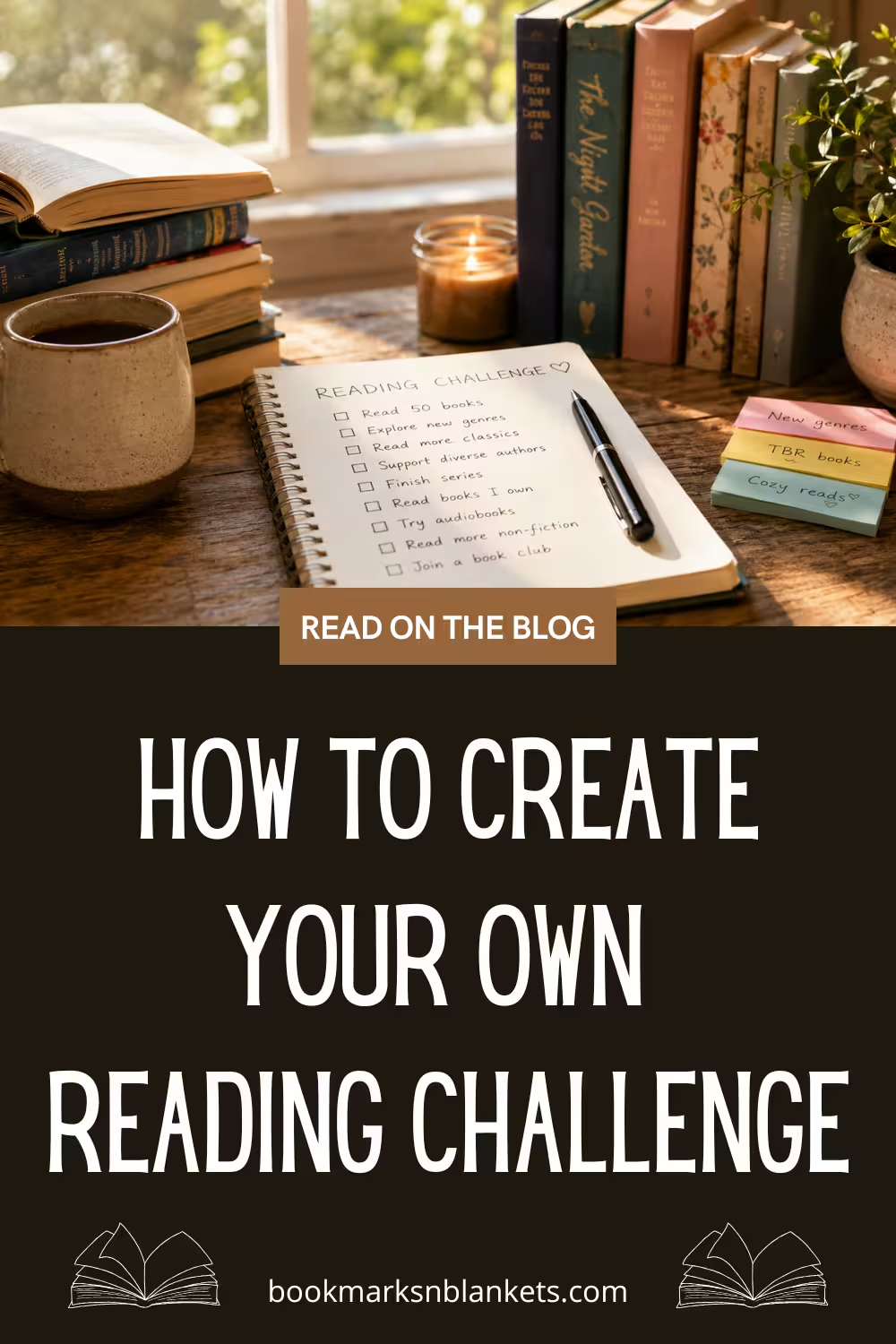



Reading challenges have become increasingly popular among book lovers, and for good reason. They add excitement to your reading life, encourage you to explore new genres, and help you stay motivated throughout the year. While there are countless pre-made reading challenges available online, creating your own personalized reading challenge can be even more rewarding.
A custom reading challenge allows you to focus on your unique reading goals, interests, and habits. Instead of following someone else’s rules, you can design a challenge that inspires you, stretches your reading horizons, and makes reading even more enjoyable.
Whether you’re trying to read more books, diversify your reading choices, tackle your towering TBR pile, or simply make reading feel fresh again, this guide will walk you through creating a reading challenge that fits your life.
Why Create Your Own Reading Challenge?
Before diving into the process, it’s helpful to understand why a personalized challenge can be so effective.
It Matches Your Reading Style
Every reader is different. Some readers love romance novels, while others prefer mysteries, fantasy, historical fiction, nonfiction, or a combination of everything.
A personalized challenge allows you to build prompts that align with your favorite genres while still encouraging variety.
It Supports Your Reading Goals
Your reading goals might be completely different from someone else’s.
Perhaps you want to:
- Read 100 books this year.
- Finish the series you’ve started.
- Read more nonfiction.
- Explore more authors.
- Reduce your physical TBR.
- Read more classics.
- Spend less time scrolling and more time reading.
Your challenge can be built around the goals that matter most to you.
It Keeps Reading Fun
The best reading challenges motivate rather than overwhelm.
When you create your own challenge, you can make it as easy or as ambitious as you’d like. The goal isn’t to create pressure. It’s to create excitement.
Step 1: Define Your Reading Goals
Start by asking yourself what you want to accomplish.
Consider questions such as:
- How many books would I like to read this year?
- What areas of my reading life could use improvement?
- What genres do I rarely read?
- What books have been sitting on my shelves the longest?
- Are there authors I’ve been wanting to try?
Write down your answers.
For example, your goals might include:
- Reading 50 books this year.
- Finishing three ongoing series.
- Reading more historical fiction.
- Reducing your unread Kindle books.
- Exploring more cozy mysteries.
These goals will become the foundation of your challenge.
Step 2: Decide on the Length of Your Challenge
Not every reading challenge has to last an entire year.
You can create:
Monthly Challenges
Perfect for readers who enjoy changing things up frequently.
Examples:
- Read one mystery.
- Read one book under 300 pages.
- Read a debut author.
Seasonal Challenges
Create challenges for:
- Spring
- Summer
- Fall
- Winter
Seasonal challenges often align with moods and themes.
For example:
Summer:
- Beach read
- Vacation setting
- Book with a bright cover
Fall:
- Cozy mystery
- Dark academia
- Book set in a small town
Annual Challenges
These provide a long-term structure and allow plenty of flexibility throughout the year.
Step 3: Choose Your Challenge Style
There are many different ways to structure a reading challenge.
Prompt-Based Challenge
This is the most common format. Each prompt represents a type of book.
Examples:
- Read a book published this year.
- Read a book with flowers on the cover.
- Read a book featuring siblings.
- Read a book set in another country.
- Read a book recommended by a friend.
Genre Challenge
Focus on exploring different genres.
Examples:
- Romance
- Mystery
- Thriller
- Fantasy
- Historical fiction
- Nonfiction
- Science fiction
- Memoir
This style helps prevent reading ruts.
TBR Challenge
Build prompts around books you already own.
Examples:
- Oldest unread book.
- Longest book on your shelf.
- Book purchased last year.
- Unread Kindle book.
- Book you’ve been avoiding.
Author Challenge
Focus on discovering authors.
Examples:
- Debut author
- New-to-you author
- Author you’ve read before
- Award-winning author
- Indie author
Series Challenge
Perfect if you’re constantly starting series but rarely finishing them.
Examples:
- Finish one trilogy.
- Complete two ongoing series.
- Continue a series you’ve neglected.
Step 4: Create Meaningful Prompts
The best prompts strike a balance between flexibility and challenge.
Avoid prompts that are too restrictive.
Instead of:
- Read a book published on March 17, 2018.
Try:
- Read a book published within the last five years.
Other fun prompt ideas include:
Book Characteristics
- Book under 250 pages
- Book over 500 pages
- Book with a blue cover
- Book with an illustrated cover
- Book featuring a map
Characters
- Main character over age 40
- Siblings
- Found family
- Single parent
- Female protagonist
Settings
- Small town
- Coastal setting
- Another country
- Historical setting
- Bookstore setting
Story Elements
- Second chance romance
- Hidden identity
- Time travel
- Murder mystery
- Quest or adventure
Reader Growth
- New genre
- New author
- Backlist title
- Award winner
- Reader recommendation
Step 5: Make It Realistic
One of the biggest mistakes readers make is creating a challenge that’s too ambitious. Be honest about your reading habits. If you typically read 30 books a year, creating a challenge with 100 prompts may feel discouraging.
Instead:
- Start small.
- Focus on enjoyment.
- Leave room for mood reading.
A challenge should enhance your reading life, not turn it into homework.
Step 6: Include Flexible Wildcard Spaces
Wildcard prompts can save your challenge when your reading mood changes.
Examples:
- Any five-star read.
- Any book of your choice.
- Any reread.
- Reader’s choice.
These flexible spots help prevent burnout.
Step 7: Add Personal Reading Goals
Your challenge doesn’t have to revolve entirely around book prompts. You can also include habit-based goals.
Examples:
- Read for 20 minutes daily.
- Visit the library monthly.
- Participate in a readathon.
- Write book reviews.
- Join a book club discussion.
- Read before bed three nights a week.
These goals focus on building a reading lifestyle rather than simply counting books.
Step 8: Track Your Progress
Tracking progress adds motivation and satisfaction.
You can use:
Reading Journal
Document:
- Books read
- Ratings
- Favorite quotes
- Reading reflections
Printable Tracker
Create a simple checklist of prompts and mark them off as you complete them.
Spreadsheet
Perfect for readers who love statistics.
Track:
- Pages read
- Genres
- Ratings
- Authors
- Publication years
Reading Apps
Many readers enjoy tracking books through dedicated reading apps and websites, such as GoodReads, The StoryGraph, and Fable. Choose whichever system feels easiest to maintain.
Step 9: Reward Yourself
Small rewards can make challenges even more fun.
Consider rewarding yourself when you:
- Complete 25% of the challenge.
- Reach the halfway point.
- Finish the entire challenge.
Ideas include:
- A new book.
- A special bookmark.
- A reading retreat day.
- A library visit.
- A favorite coffee shop trip.
The reward doesn’t need to be expensive. It simply creates a sense of celebration.
Sample Personalized Reading Challenge
If you’re not sure where to begin, here’s an example challenge featuring 24 prompts.
- Read a book from your oldest TBR.
- Read a new-to-you author.
- Read a cozy mystery.
- Read a historical fiction novel.
- Read a romance with a small-town setting.
- Read a book over 400 pages.
- Read a book under 250 pages.
- Read a library book.
- Read a Kindle Unlimited title.
- Read a backlist favorite.
- Read a debut author.
- Read a book published this year.
- Read a book recommended by a friend.
- Read a book with flowers on the cover.
- Read a book set during summer.
- Read a book set during winter.
- Read a series starter.
- Continue a series.
- Finish a series.
- Read a five-star prediction.
- Read a book outside your comfort zone.
- Reread your favorite cozy fantasy.
- Read a reader’s choice selection.
- Read your most anticipated release.
How to Adjust Your Challenge Throughout the Year
Remember that your challenge is not set in stone.
Life changes. Reading moods change.
Maybe you discover a new favorite genre. Maybe you experience a reading slump. Maybe your schedule becomes busier than expected.
Give yourself permission to:
- Change prompts.
- Add prompts.
- Remove prompts.
- Lower goals.
- Increase goals.
Flexibility often leads to greater success.
Common Reading Challenge Mistakes
Creating Too Many Prompts – More isn’t always better. A challenge with 20 meaningful prompts often works better than one with 100.
Ignoring Your Reading Preferences – While challenges should encourage growth, they shouldn’t force you to read books you have no interest in. Balance comfort reads with new experiences.
Focusing Only on Numbers – Reading isn’t a competition. Don’t become so focused on completing prompts that you forget to enjoy the books themselves.
Comparing Yourself to Other Readers – Your challenge should reflect your reading life, not someone else’s. Read at your own pace and celebrate your own accomplishments.
Final Thoughts
Creating your own reading challenge is one of the best ways to make your reading life more intentional, exciting, and rewarding. By focusing on your personal interests, goals, and habits, you can design a challenge that encourages growth while still keeping reading fun.
The beauty of a personalized reading challenge is that there are no rules beyond the ones you create. Whether your challenge includes 10 prompts or 100, focuses on exploring new genres or finally conquering your TBR pile, the most important thing is that it inspires you to spend more time doing what you love: reading great books.
So grab a notebook, open a spreadsheet, or create a printable tracker, and start designing your perfect reading challenge today. Your next favorite book might be waiting behind a prompt you haven’t even written yet.
Happy Reading!